RYUDO
Feet · In testing

Off the mat.

You train barefoot. These are for the walk there and back. A plain flip-flop with one difference: two copper marks run through the sole, so on grass, sand or soil your foot stays in electrical contact with the ground, the way it is when you stand barefoot. Three designs are being tried. Only one will be made.

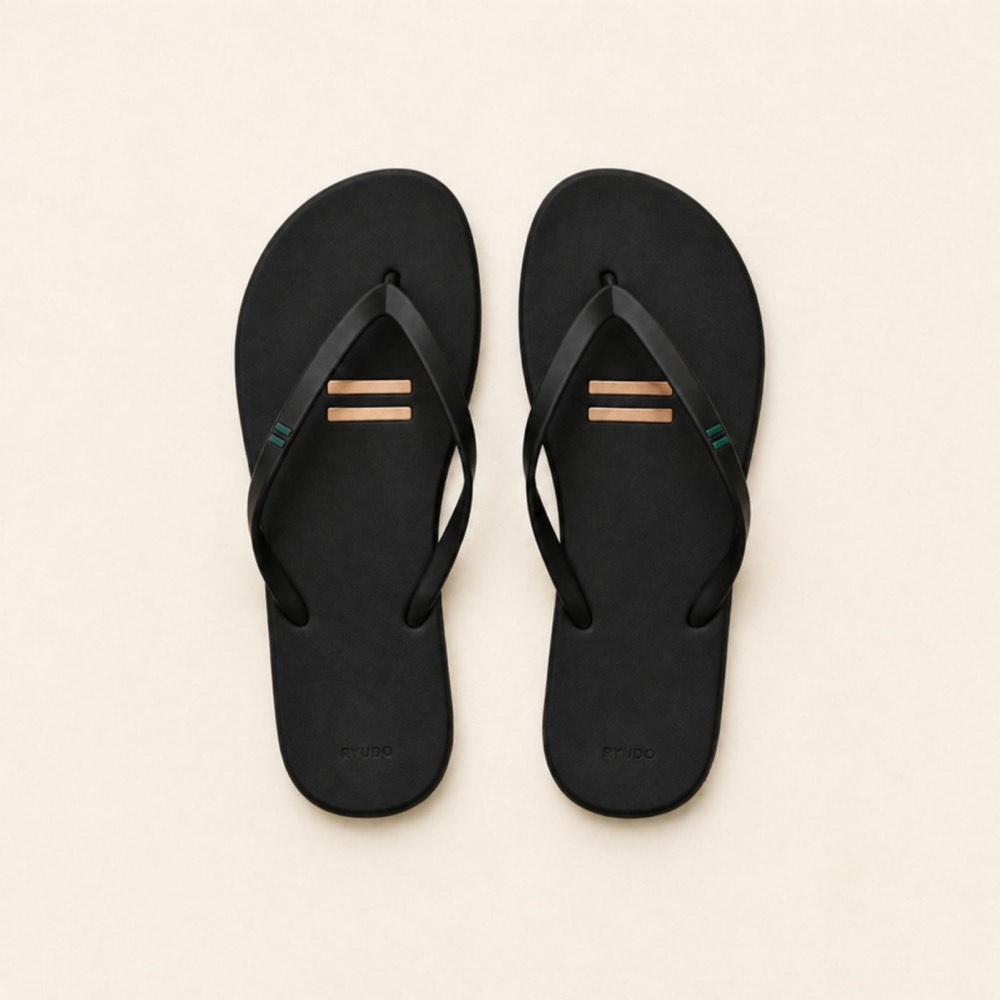
A pair of matte black flip-flops seen from above, two short copper bars set into each footbed
The pair
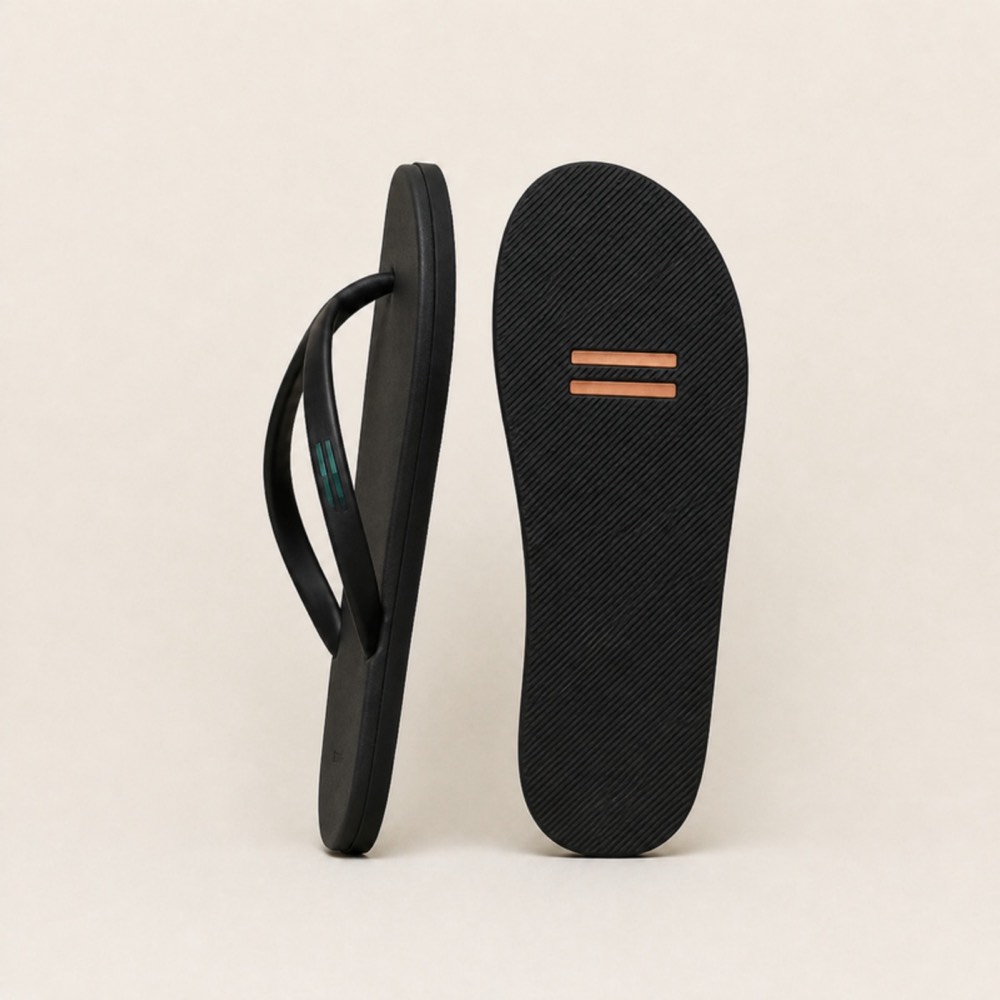
One black flip-flop on its side and one turned over, showing the two copper bars coming through the underside
The sole
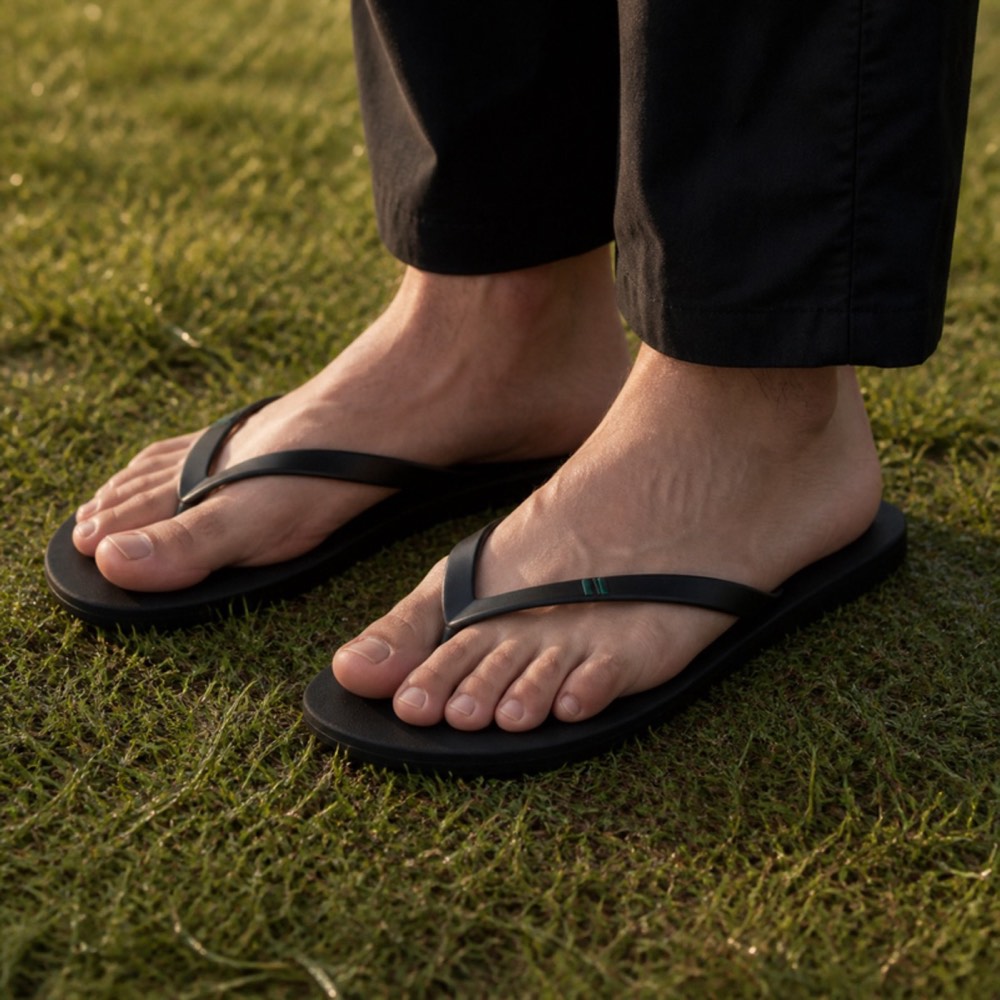
The black flip-flops worn on grass
On grass

1. The black

All black · The two marks in copper
In testing

The quietest of the three. Black sole, black strap, and the two marks in copper under the ball of the foot. The name is pressed small into the heel.

How it conductsThe two bars are solid copper and run right through the sole. Your skin touches them on top; they touch the ground underneath. The rubber around them does not conduct.
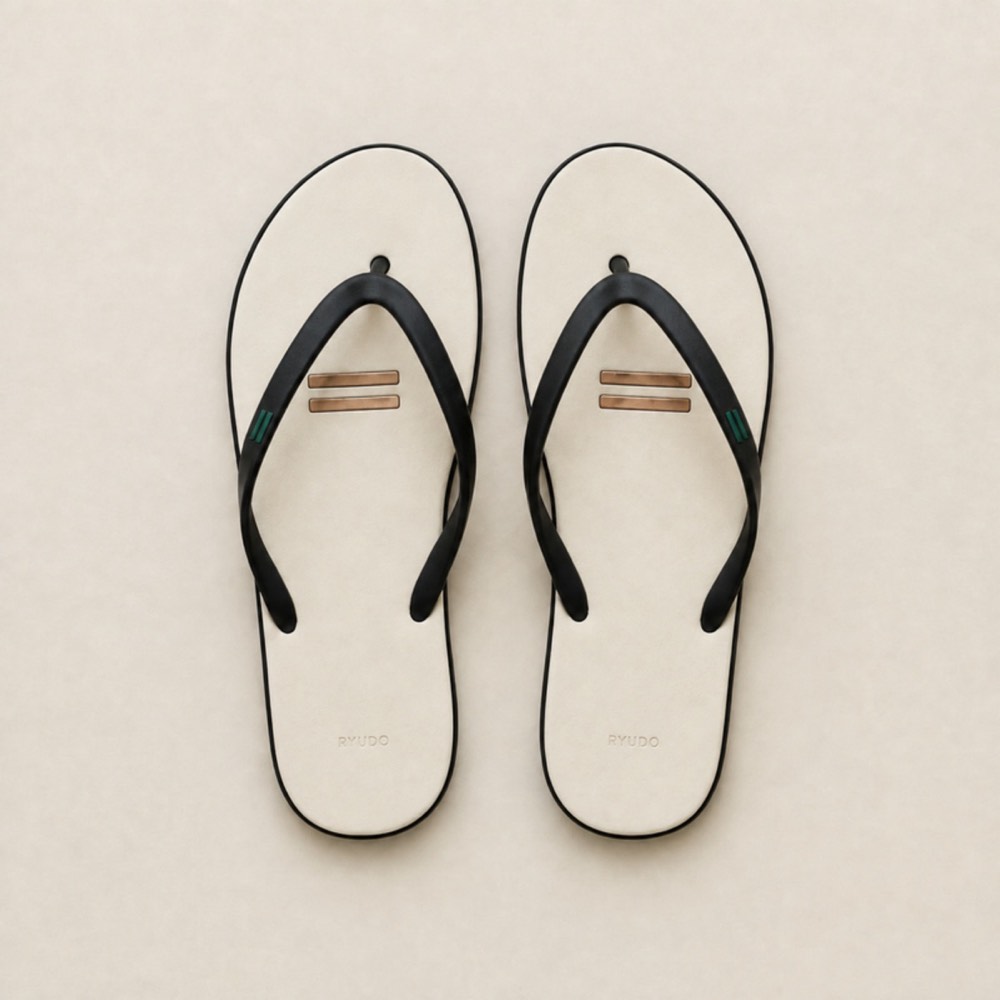
A pair of warm white flip-flops with black straps seen from above, two short copper bars set into each footbed
The pair
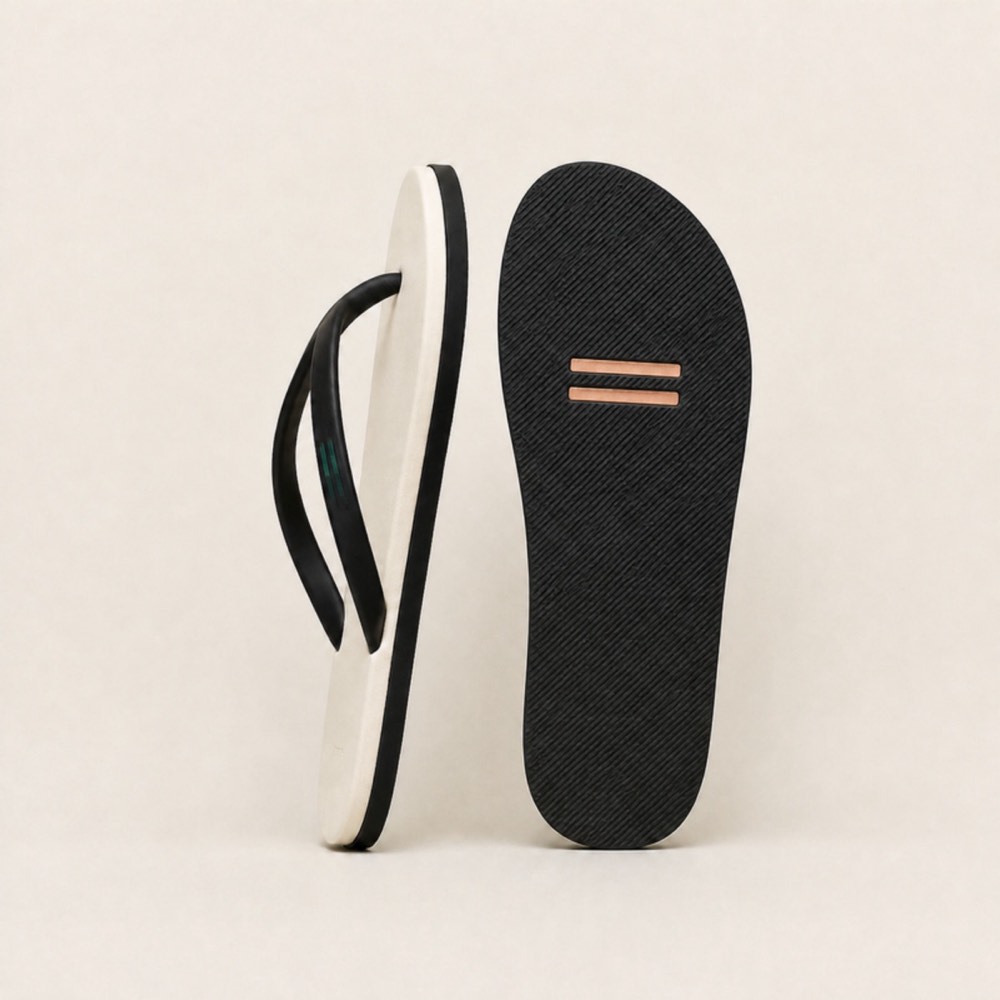
One warm white flip-flop on its side and one turned over, showing the two copper bars coming through the black underside
The sole
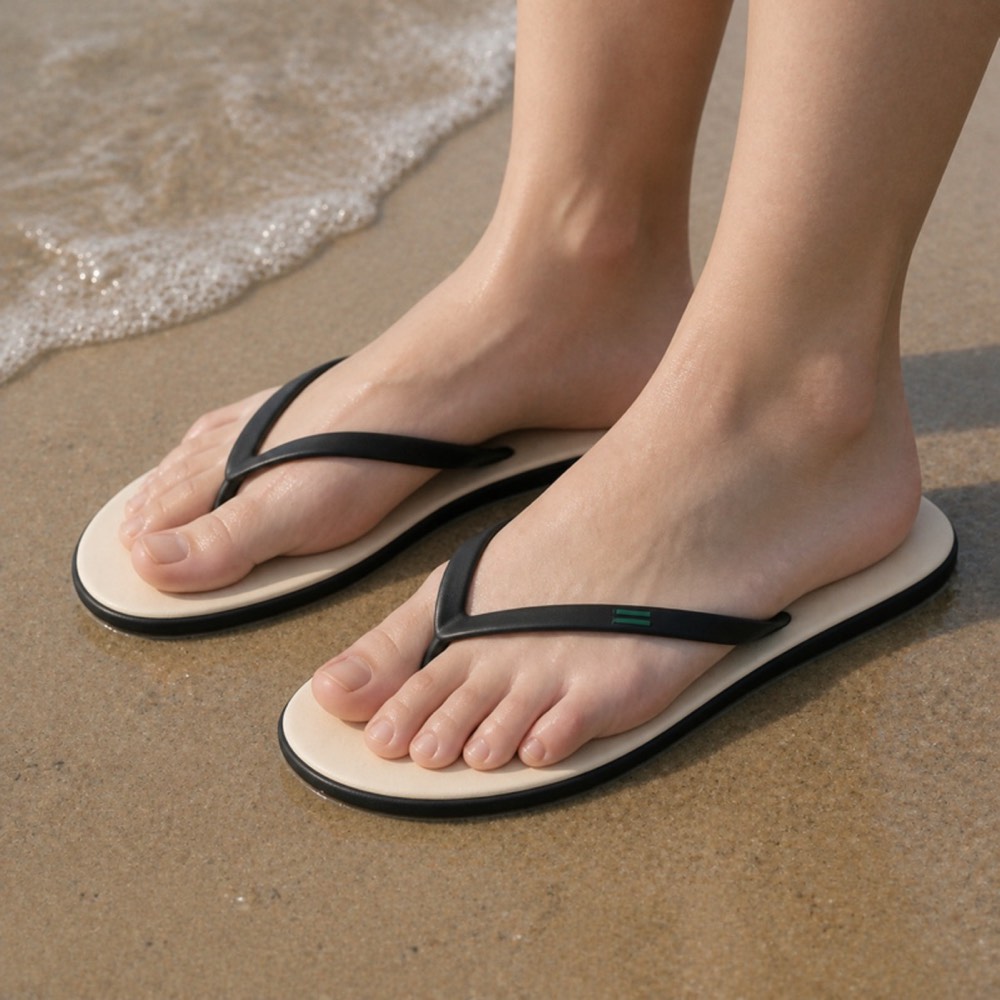
The warm white flip-flops worn on wet sand
On wet sand

2. The warm white

Warm white footbed · Black strap · The two marks in copper
In testing

The same build on a warm white footbed, with a thin black edge and a black strap. The copper shows more against the pale footbed.

How it conductsAs on the black: two solid copper bars through the sole, skin on top, ground underneath.
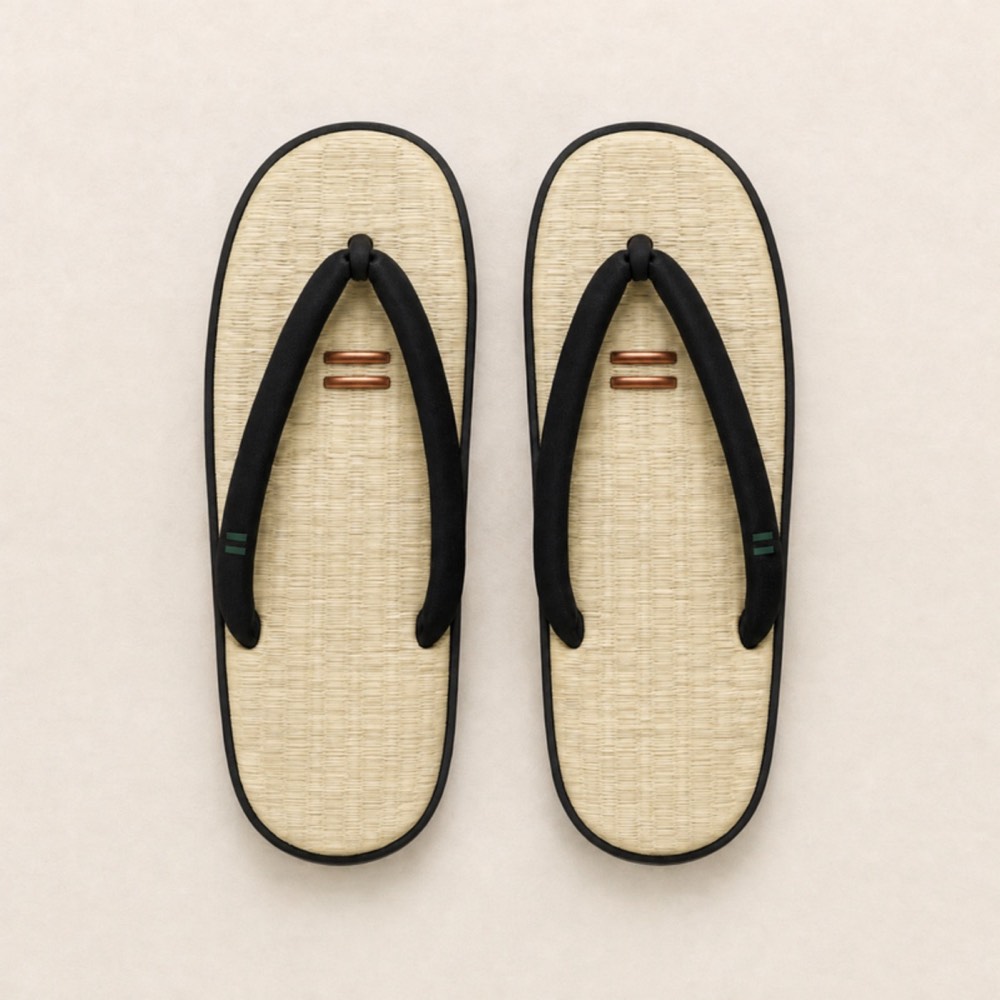
A pair of zōri sandals with a woven hemp footbed and soft black straps seen from above, two short copper bars set into each footbed
The pair
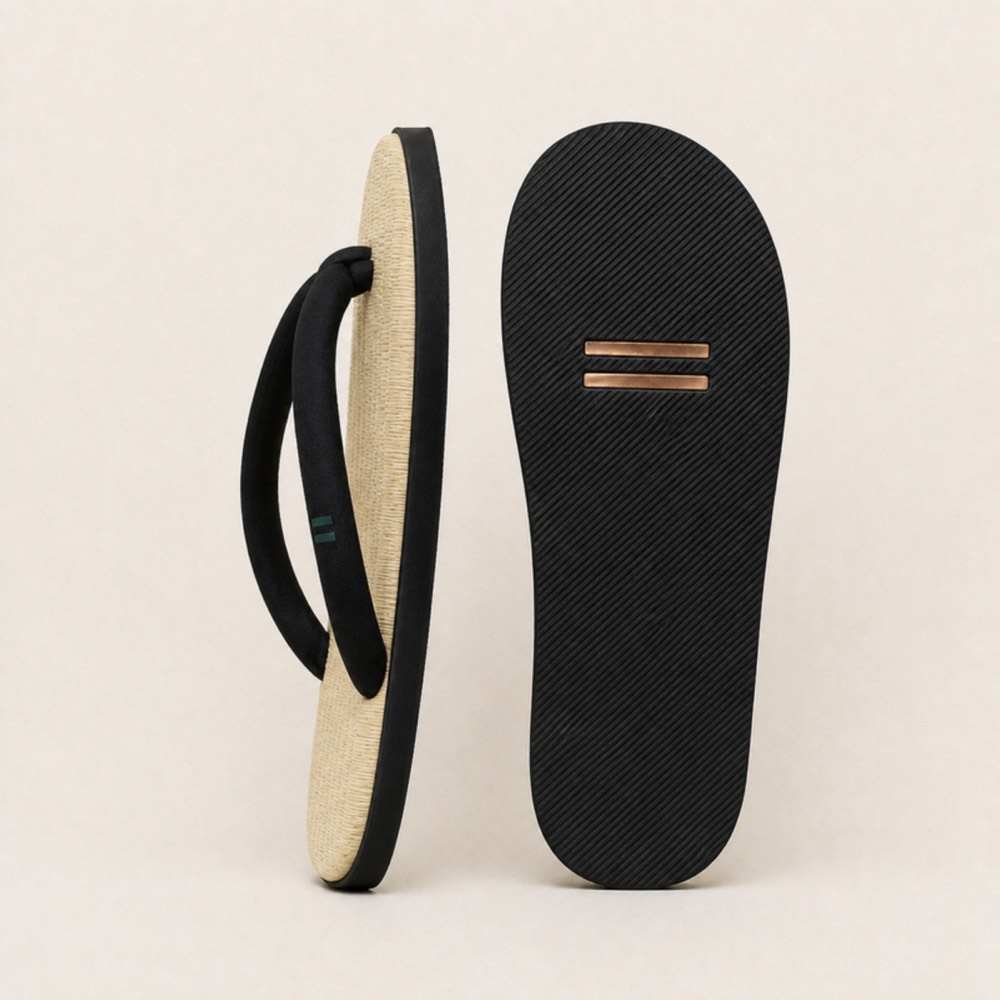
One zōri on its side and one turned over, showing the two copper bars coming through the black underside
The sole
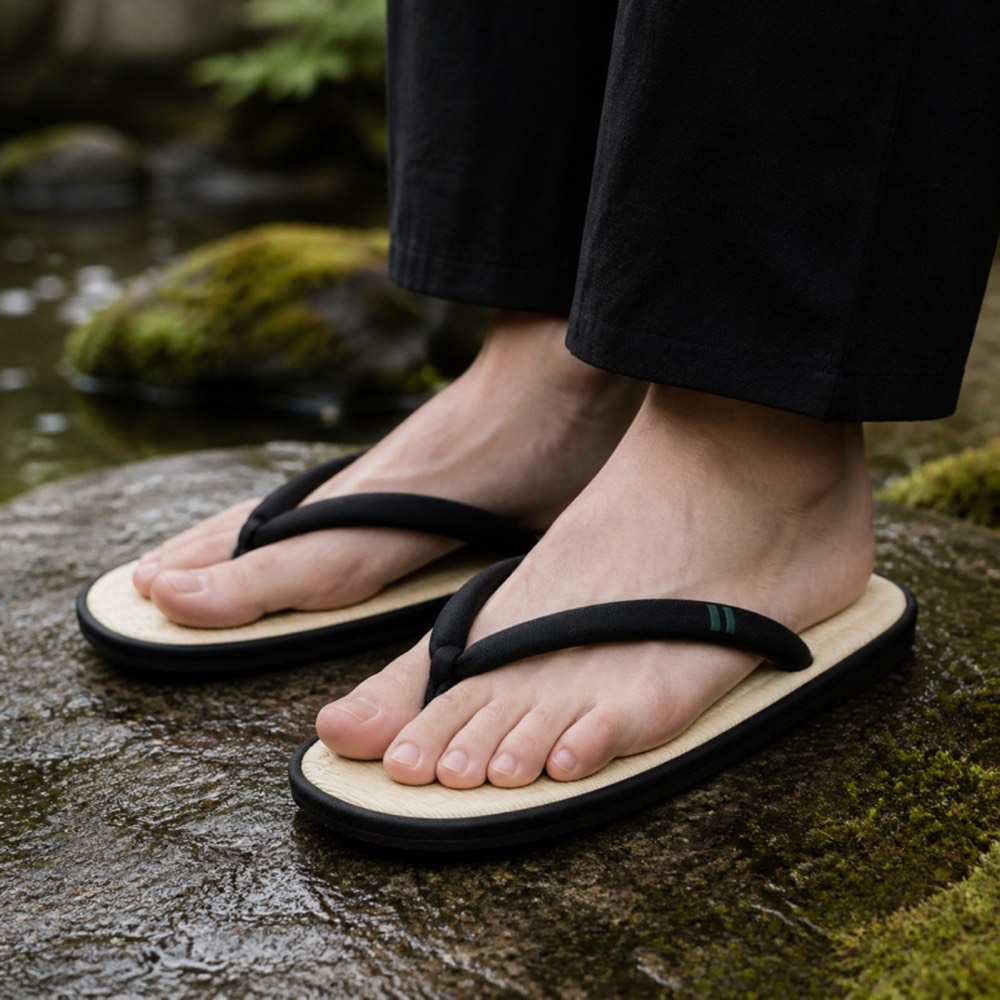
The zōri worn on wet stone
On wet stone

3. The zōri

Woven hemp footbed · Soft black strap · The two marks in copper
In testing

The Japanese one. The old zōri shape, the same for left and right, with a woven hemp footbed and a soft cloth strap. The two copper marks sit in the weave.

How it conductsHemp on its own does not conduct. The two copper bars pass through the weave and the rubber sole to the ground.
In plain words

What it is, and what it is not.

Some people call this grounding. We would rather tell you how it is built and leave the rest to you.

What it does

  • Gives a copper path from the skin of your foot to the ground. That is all.
  • It works on ground that conducts: grass, soil, sand and bare stone. Better when damp.
  • It does nothing on tarmac, wood, carpet, or most indoor floors.
  • Bare feet do the same thing. This is for when you would rather have something under them.

What we do not say

  • We make no health claims. It is not a treatment and it is not a medical product.
  • The studies on grounding are small and early. We do not lean on them.
  • It is not safety footwear, and it is not for use around electrical work.
  • Nothing here is made yet. The first pairs will be tested with a meter before anything is sold. Bare copper darkens with wear and can leave a mark on skin.